If you're reading this at 2 AM, one-handed, you're in the right place.
Most mothers who find this page describe the same night.
Baby feeds to sleep. The transfer to the crib takes twenty careful minutes, and fails about half the time.
The first waking. Feeding back down is the only thing that works.
Again.
Again. You've stopped checking the clock.
Again. In a few hours the day starts, whether you slept or not.
Your baby isn't waking because they're hungry. Falling asleep any other way is a skill nobody has taught them yet.
And you're tired in a way that's hard to describe to anyone who hasn't lived it. Not "I need a coffee" tired. The kind where you cry in the car for no particular reason, snap at your partner over nothing, and can't remember what you walked into the kitchen for.
Something worth saying clearly, because most mothers need to hear it: none of this is your fault. Feeding a baby to sleep is one of the most natural things in the world. It works beautifully, right up until it doesn't.
What's actually happening is simple. All of us, adults included, wake briefly between sleep cycles several times a night. We roll over and drift back down without noticing. But if your baby has only ever fallen asleep while feeding, then feeding is the only way back down they know. So every time they surface, they need you.
You've probably already looked at the usual options. Letting them cry alone in a dark room, which you can't bring yourself to do. Waiting for them to grow out of it, except month eight became month fourteen and it's getting harder, not easier. Or the forums, where one thread contradicts the next by lunchtime.
There is another way, and it doesn't ask you to choose between your baby's sense of safety and your own.
What changes
What bedtime looks like on the other side of this
A short, familiar wind-down. You put your baby in the crib drowsy but awake, say goodnight, and stay nearby while they settle themselves. It takes a few minutes. No feeding, no forty-minute transfer, no held breath.
Mothers who've been through the program tend to mention the same handful of things afterward:
🌙Night wakings shrink on their own. A baby who can fall asleep independently at bedtime can usually resettle at 2 AM without help.
🕯️Evenings come back. Dinner with your partner. A bath. Reading. Sitting in silence, which counts too.
☀️Mornings feel different when the night wasn't broken into five pieces.
💛If you're still breastfeeding, it becomes something you choose and enjoy again, rather than something you're needed for eight times a night.
🧠And your baby learns all of it feeling held, safe, and loved, because you were there the whole time.
Every baby has their own pace. Some get there in three nights, others need a week or so. What stays constant is the direction: less resistance, longer stretches, and a calmer bedtime for both of you.
The Sleep Baby Method
Why the things you've tried haven't worked
Most sleep advice goes after the night wakings themselves. More rocking, a different white noise machine, a later bedtime, an earlier one. It rarely holds, because the wakings are a symptom. The cause is the association your baby has built between feeding and falling asleep, and until that association changes, the nights won't. This method works on the association directly. It has two parts, and the order matters.
Part One
The Foundation: the "Seed Method" 🌱
Before touching a single night feed, we set up the day so the night has a chance. Feeding rhythm, nap timing, the sleep space, and a wind-down your baby starts to recognize. This sounds unglamorous, and it is. It's also the reason the second part goes so much more smoothly than parents expect. A baby who arrives at bedtime well-fed, well-rested, and settled by a familiar routine simply has less to fight against.
Part Two
The Gentle Unlink: the "Little Cow Technique" 🤍
The heart of it. Over a series of small, manageable steps, feeding and falling asleep are separated, with you present at every single one. There are exact scripts and video demonstrations, because "gentle" advice usually fails by being vague, and mothers at 3 AM need to know precisely what to do. Your baby learns, gradually and calmly, that they can fall asleep and you're still there.
Some protest along the way is normal. Change is change, even gentle change. But there is a world of difference between a grumbly few minutes in your arms and screaming alone behind a closed door. This method never leaves the first category.
The 3-day challenge
The first three nights
Night 1
Understand & Prepare
Work out which of the four sleep-association patterns your baby fits, because the approach shifts slightly for each, and set up the foundation. Many parents notice something that first evening: settling takes less time, with less fuss.
Night 2
Begin the Unlink
Follow the technique at bedtime using the demonstrations and scripts from the lessons. This is the night feeding and falling asleep start to come apart, quietly, with your baby calm and you close.
Night 3
Carry It Into the Night
The same skill gets extended to the overnight wakings, along with a simple protocol for making the new pattern stick. This is usually where the longer stretches begin.
After that: follow-along modules cover full night weaning if and when you want it, plus regressions, travel, teething, and illness, so a bad week doesn't undo a good month. A note on honesty, because you've probably been burned by big promises before: three nights is the fastest common outcome, not a deadline. Some babies need seven to ten. You should see clear progress within the first 72 hours, and if you don't, the guarantee below means you've lost nothing.
An honest filter
Read both lists before you decide
This will help you if…
Your baby is between 4 months and 3 years old and only falls asleep feeding
You're up three, five, eight times a night feeding them back down
Crying it out is off the table for you, for good
You can follow a simple plan consistently for somewhere between 3 and 10 nights
You'd like to keep breastfeeding during the day but stop being the all-night solution. Or wean completely. Both paths are covered, and both are fine
This is not for you if…
Your baby is under 4 months. Their sleep isn't developmentally ready, and we'd rather tell you to wait than take your money
You want results with no participation. This is a method, not a spell
Your baby has an untreated medical issue affecting sleep, such as reflux or sleep apnea. See your pediatrician first. This works alongside medical care, never instead of it
Real families, real nights
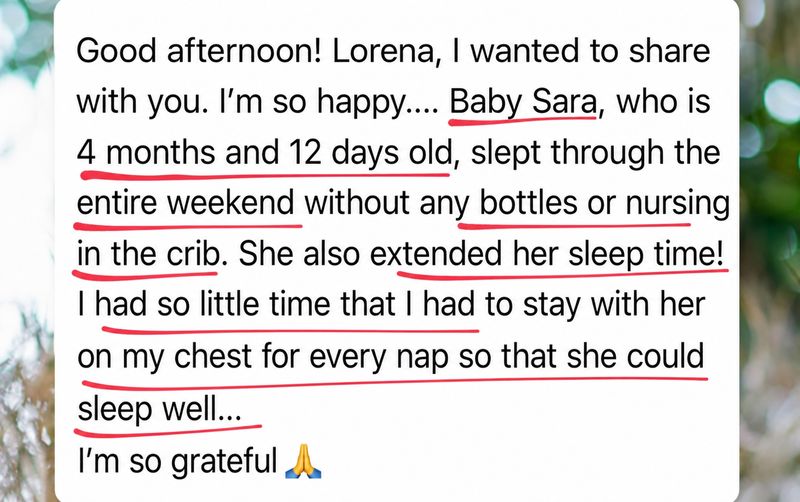
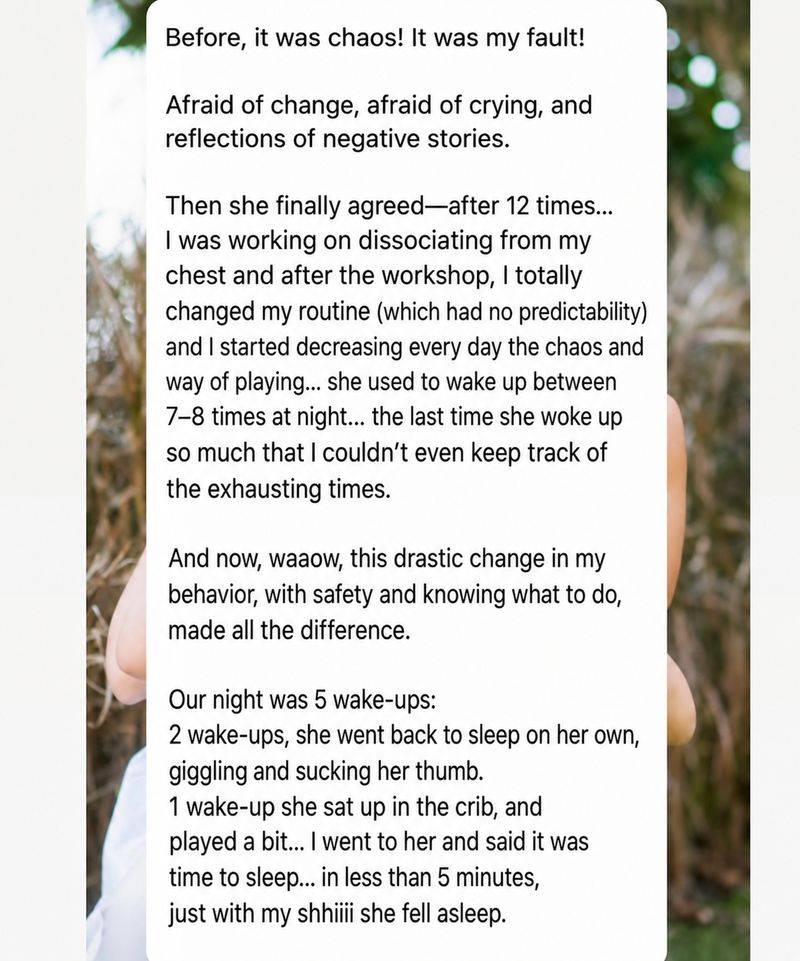
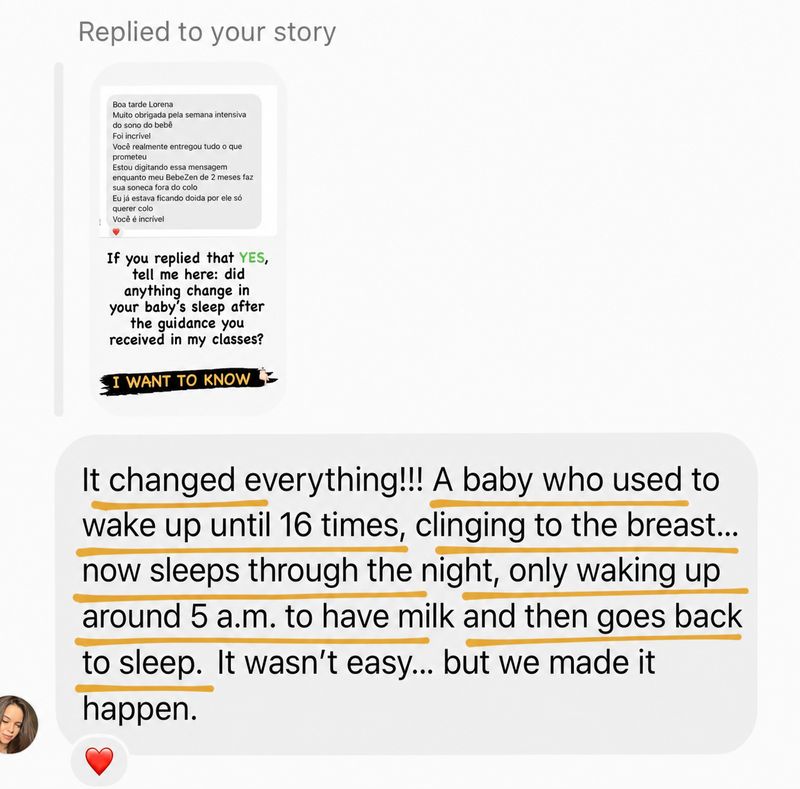
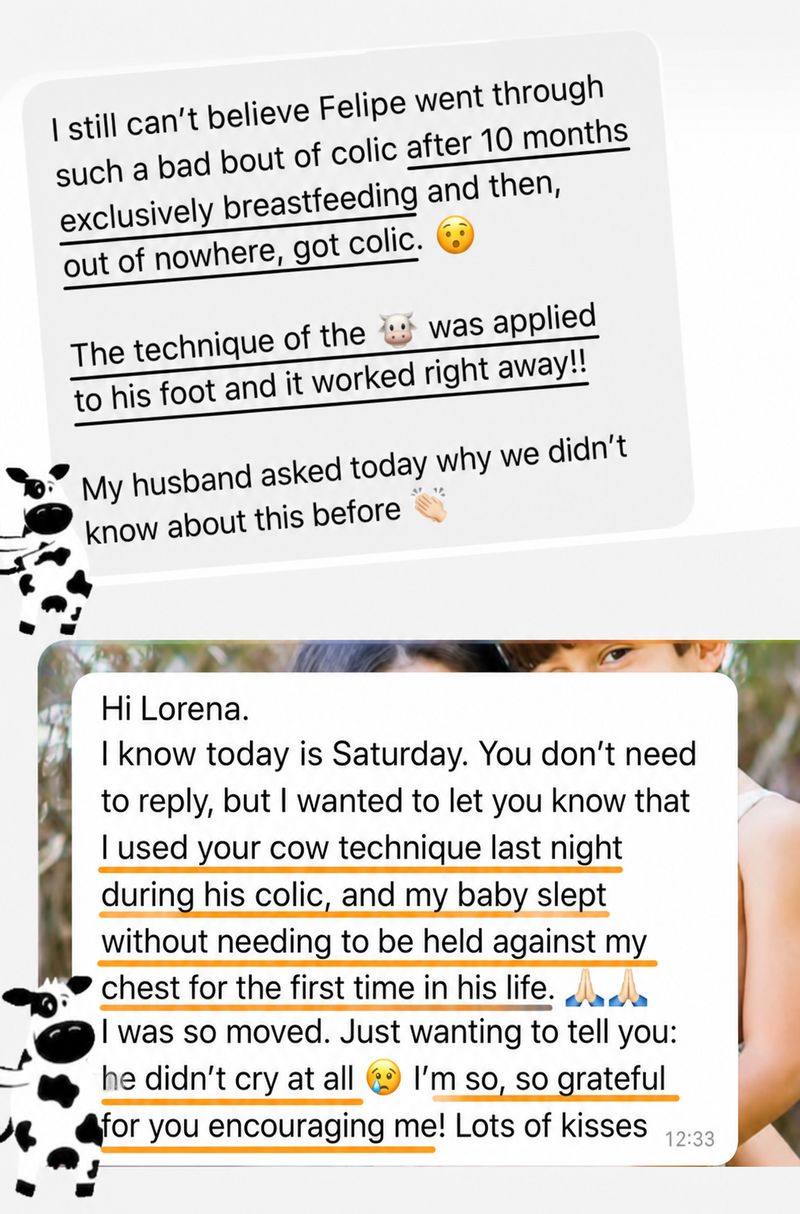
From mothers who've done it
Results vary with each baby and with consistency. Every review shown is from a verified customer.
Lovely to meet you. I'm Lauren Brooks, a neuroscientist specializing in infant sleep and breastfeeding, mom to Francisco and Frederico, and founder of the Sleep Baby Method.
I help mothers all over the world who feel lost, frustrated, and out of hope from sleep deprivation get their calm nights back. Francisco has slept 11 to 12 hours a night since he was 5 months old, and Frederico since he was 2 months. Their sleep makes my own mothering lighter, and gives our whole family the energy to actually enjoy a stage that only happens once.
My first degree was in law, of all things. Then my first son arrived, and the world of infant sleep took over. It never let go.
🎓 Specialist in Infant Sleep Neuroscience and in Child Development & Education, postgraduate degree from PUC-RS
🧠 8 years working in infant sleep through the Sleep Baby Method, and co-founder of the Infant Sleep Institute, where I also train professionals in the field
📺 Former columnist on the TV program Saber Viver, speaking about motherhood and infant sleep
👶 More than 5,000 families guided, across 25+ countries
👩🎓 9 sleep courses with proven results and more than 25,000 students
These days this work is what I'm known for, and it's still my favorite thing: helping families get not just better sleep, but a lighter, warmer way of mothering.
"One thing I tell every mother before we start, and I mean it: I will never ask you to leave your baby crying alone. The whole method exists because I wouldn't do that with my own."
Everything you get
The complete program, ready before bedtime tonight
The Sleep Baby Method
Complete video program · watch on any device · 12 months of access
16 short video lessonsEach under 15 minutes, watchable one-handed while feeding$197
The FoundationFeeding rhythm, routine, and sleep environment by ageIncluded
The Gentle UnlinkFull demonstrations plus word-for-word scriptsIncluded
Bonus 1 · The Complete Night-Weaning ProtocolFor when and if you're ready$47
Bonus 3 · The Regression GuideTeething, travel, illness, and milestones$26
Total value$297
Today
$37
A single session with a private sleep consultant runs $150 to $400, covers one hour, and ends when the hour does. This is the full system, available at 3 AM when you actually need it.
Why $37? Honestly, because the mothers who need this most are deep in it right now, and we'd rather reach ten thousand of them at this price than a few hundred at consultant rates. The price gets reviewed from time to time. Whatever you see today is what you pay, with nothing added later.
The guarantee
Seven nights, full refund, no explanation needed.
Use the whole method for seven nights. If you're not seeing genuine progress, or it simply isn't right for your family, email the word "refund" to support and every cent comes back. No forms, no phone call, no one asking you to justify it.
We can offer this because we know what tends to happen by night seven. If it doesn't happen for you, you shouldn't pay for it. That seems fair, and it means the only thing you're actually risking by trying is nothing. The nights you're living now, on the other hand, have a cost you already know.
Answered honestly
Questions mothers ask
Do I have to stop breastfeeding? +
No, and this matters. The method separates feeding from falling asleep, not feeding from your life. Daytime nursing can continue as long as you both want. Night weaning is included as a bonus for when and if you choose it. Your call entirely.
Will my baby cry? +
Some protest is normal with any change, and we won't pretend otherwise. But you are with your baby the whole time, holding, soothing, present. A frustrated grumble in your arms is not the same thing as being left alone in a dark room, and this method never involves the second one.
My baby is [X] months old. Will it work? +
The program covers 4 months to 3 years, with separate tracks by age, because a 5-month-old and a 2-year-old need different handling. Under 4 months, wait. Their sleep isn't ready, and we'd rather say so plainly.
We use bottles, or a mix. Does it still apply? +
Yes. The association works the same way whether the sleep crutch is breast or bottle, and the technique adapts to both.
I've already tried other programs. What's different here? +
Most programs try to fix the night without touching the day, and most gentle advice never addresses the feed-sleep link directly, which is the actual cause. This does both, in that order. And if it turns out not to be different for you, the guarantee means the experiment cost you nothing.
I'm exhausted. How much time does this need? +
The lessons are under 15 minutes each and made to be watched while feeding. You can start tonight having seen only the first two.
Our baby sleeps in our room. Is that a problem? +
Not at all. Room-sharing setups are covered directly in the program.
How quickly do I get access? +
Within about two minutes of paying. Card, Apple Pay, or Google Pay, then a login link by email. Works on a phone, tablet, or laptop, anywhere.
One last thing
Tonight, sometime around 1 AM, your baby will probably wake up.
That part happens either way. What's actually being decided right now is what the next few weeks look like.
One version: nothing changes
You go in, feed for half an hour, transfer, hope, and do it again at three. Next month looks like this month.
The other version: tonight is night one
Within about 72 hours you're watching your baby settle without feeding. Within a couple of weeks, a full night's sleep stops being an event worth texting your mother about and becomes an ordinary Tuesday.
Same baby. Same love in the room. Just a skill nobody had taught them yet, and a plan for teaching it kindly. You've already given your baby hundreds of nights. This is how both of you get them back.
How many more 3 AM feeds feel manageable from here? The full method is $37, covered by a 7-night refund with no questions asked. Trying it costs you nothing. Another month of nights like last night has a cost you already know.